The modern office worker spends an average of 6–8 hours daily sitting at a desk, often slouched over a keyboard, leading to stiff joints, poor circulation, and chronic pain. Prolonged sitting is linked to a higher risk of heart disease, diabetes, and musculoskeletal disorders, but small, consistent movements can counteract these effects. This guide provides science-backed desk stretches and exercises to help you stay active, energized, and pain-free—no gym or equipment required.
The Risks of Prolonged Sitting
- Neck and Shoulder Pain: From hunching over screens.
- Lower Back Strain: Due to poor lumbar support and slouching.
- Carpal Tunnel Syndrome: Repetitive typing and mouse use.
- Tight Hips and Hamstrings: From sitting in a fixed position.
- Reduced Circulation: Leading to swollen ankles and fatigue.
Research shows that taking 2–3 minute movement breaks every 30 minutes can reduce these risks, improve focus, and boost productivity by 15% (Journal of Occupational Health Psychology).

Essential Desk Stretches to Relieve Tension
1. Neck and Shoulder Relief
a. Chin Tucks
- Why: Counteracts “tech neck” and forward head posture.
- How:Sit tall, shoulders relaxed.Gently tuck your chin toward your chest, creating a double chin.Hold for 5 seconds, release. Repeat 10x.
b. Shoulder Shrugs and Rolls
- Why: Relieves trapezius tension.
- How:Shrug shoulders up toward ears, hold for 3 seconds.Roll shoulders backward in a circular motion 10x, then forward 10x.
2. Upper Back and Chest Opener
a. Seated Cat-Cow
- Why: Mobilizes the spine and opens the chest.
- How:Sit tall, hands on knees.Inhale, arch your back, and lift your chest (Cow Pose).Exhale, round your spine, and tuck your chin (Cat Pose).Repeat for 1 minute.
b. Doorway Chest Stretch
- Why: Stretches tight pectoral muscles from slouching.
- How:Stand in a doorway, elbows bent at 90 degrees.Place forearms on the door frame, step one foot forward.Lean gently into the stretch for 20–30 seconds.
3. Wrist and Forearm Stretches
a. Prayer Stretch
- Why: Alleviates carpal tunnel discomfort.
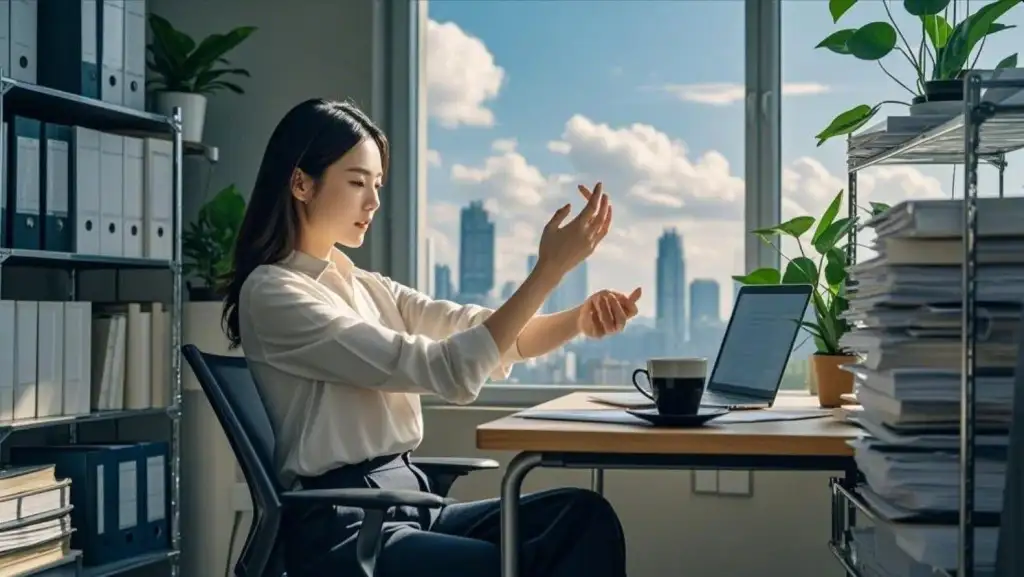
- How:Press palms together in front of your chest.Slowly lower hands toward your waist while keeping palms pressed.Hold for 20 seconds.
b. Wrist Extensor Stretch
- Why: Relieves tension from typing.
- How:Extend your right arm, palm facing down.Use your left hand to gently pull fingers toward your body.Hold 15 seconds; switch sides.
4. Lower Back and Hip Stretches
a. Seated Forward Fold
- Why: Stretches hamstrings and lower back.
- How:Scoot to the edge of your chair, feet flat.Hinge at the hips, reaching hands toward toes.Hold for 30 seconds.
b. Seated Figure-4 Stretch
- Why: Opens tight hips and glutes.
- How:Sit tall, cross your right ankle over your left thigh.Gently press down on the right knee.Hold 20 seconds; switch sides.
5. Legs and Ankles
a. Ankle Circles
- Why: Improves circulation and reduces swelling.
- How:Lift one foot off the floor.Rotate ankle clockwise 10x, then counterclockwise.Repeat on the other side.
b. Calf Raises
- Why: Activates lower legs and prevents stiffness.
- How:Stand behind your chair, feet hip-width apart.Rise onto your toes, hold for 2 seconds, lower.Repeat 15x.
Desk-Friendly Exercises to Stay Active
Turn your workstation into a mini-gym with these calorie-burning moves:
1. Chair Squats
- How:Stand in front of your chair, feet hip-width apart.Lower into a squat until you lightly touch the chair.Stand back up. Do 3 sets of 12 reps.
2. Desk Push-Ups
- How:Stand arm’s length from your desk, hands on the edge.Lower your chest toward the desk, elbows at 45 degrees.Push back up. Do 3 sets of 10–15 reps.
3. Glute Squeezes
- How:Sit or stand tall.Squeeze glutes tightly for 5 seconds, release.Repeat 20x.
4. Seated Leg Extensions
- How:Sit tall, feet flat.Extend one leg straight, flexing your foot.Hold for 5 seconds, lower. Alternate legs for 1 minute.
5. Standing Side Crunches
- How:Stand, feet hip-width apart.Lift right knee toward right elbow, crunching obliques.Alternate sides for 1 minute.
Ergonomics: Optimize Your Workspace
Pair movement with proper desk setup to prevent strain:
| Area | Adjustment |
| Chair | Hips slightly above knees; lumbar support. |
| Desk Height | Elbows bent at 90 degrees; wrists straight. |
| Monitor | Top of screen at eye level, 20–30 inches away. |
| Keyboard/Mouse | Keep close to avoid overreaching. |
Micro-Workouts: Sneak Activity into Your Day
- Every 30 Minutes: Set a timer to stand, stretch, or walk for 2–3 minutes.
- Walking Meetings: Suggest mobile meetings for 1:1s.
- Stair Breaks: Climb 2–3 flights of stairs hourly.
- Hydration Strategy: Use a small water bottle to force frequent refill trips.
Sample Daily Routine for Office Workers
9:00 AM: Start with seated cat-cow and chin tucks.
10:30 AM: 2-minute standing side crunches + calf raises.
12:00 PM: Lunch walk (10–15 minutes).
2:00 PM: Doorway chest stretch + seated figure-4.
3:30 PM: Desk push-ups (3 sets of 12) + ankle circles.
5:00 PM: End the day with seated forward fold and prayer stretch.
Tools to Stay Accountable
- Apps: Stand Up! (reminders to move), StretchMinder (guided stretches).
- Fitness Trackers: Set hourly step goals (e.g., 250 steps/hour).
- Posture Correctors: Wearable devices like Upright Go 2 vibrate when you slouch.
Case Study: From Chronic Pain to Pain-Free
Background: Mark, 42, suffered from lower back pain and migraines after 10+ years at a desk job.
Intervention:
- Daily Routine: 5-minute desk stretches every 90 minutes + 10-minute lunch walks.
- Ergonomics: Upgraded chair, monitor riser, and keyboard tray.Results: After 6 weeks, Mark reduced back pain by 70% and eliminated tension headaches.
FAQs
Q: How long should I hold each stretch?
A: 20–30 seconds for static stretches; 5–10 reps for dynamic movements.
Q: Can I do these exercises in formal office attire?
A: Yes! Opt for subtle moves like ankle circles, seated leg extensions, or glute squeezes.
Q: What if I feel pain during a stretch?
A: Stop immediately. Pain indicates overstretching or improper form.
Q: How can I remember to take breaks?
A: Use app alerts, sticky notes, or a smartwatch reminder.
Conclusion
For office workers, staying healthy isn’t about finding extra time—it’s about optimizing the time you have. By integrating desk stretches, micro-workouts, and ergonomic tweaks into your day, you can combat stiffness, boost energy, and protect your long-term health. Remember, small movements add up: just 10 minutes of daily stretching can prevent chronic pain, improve posture, and keep you performing at your best. Your body is your most valuable asset; treat it like one, even at your desk.


